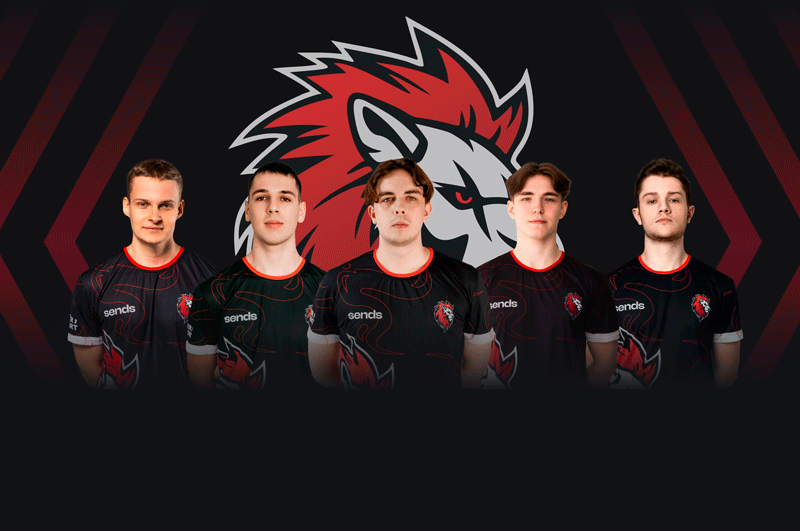
Leo Team is a Ukrainian esports organization that has spent the past several years building its place in the European Counter-Strike scene. Founded in 2021, the team progressed from smaller online competitions to regular appearances in CCT, ESL Challenger League and other European tournaments.
The beginning of Leo Team
The history of Leo Team began in November 2021, when the organization entered Counter-Strike under the LeoGaming name.
Its first roster was built around the former 2EASY ESPORTS lineup, featuring Maha, fenny, sleiden, eightz and muR. Rather than immediately targeting the highest level of European competition, the organization began its development through smaller leagues, qualifiers and online tournaments.
The following years brought frequent roster changes as Leo searched for a lineup capable of competing consistently on the European tier-two and tier-three circuit.
The organization later competed under the L&G name before adopting Leo Team as its primary identity.
First trophies and progress in Europe
One of the team’s first notable results came in 2022 with victory at the ESEA Advanced Cash Cup Europe.
A bigger breakthrough followed in July 2023, when Leo won United21 Season 4. The Ukrainian organization defeated allStars 3-0 in the final and earned $2,500.
The result was important for a team still trying to establish itself outside the Ukrainian scene.
Leo continued competing across European online tournaments, with 2024 becoming another step forward.
In September, the team won the Gameinside.ua ROG Autumn Cup 2024, and less than two months later added another trophy at United21 Season 22, defeating Anonymo 2-0 in the final.
The latter victory brought Leo $6,000 – one of the largest tournament prizes in the organization’s history.
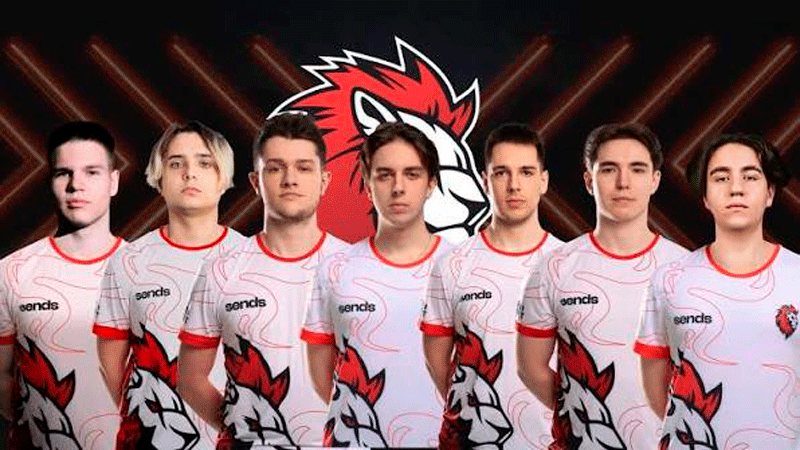
Climbing the Counter-Strike rankings
Tournament results gradually translated into progress in the international rankings.
By late 2024 and the following seasons, Leo had moved considerably closer to the established European tier-two scene. According to HLTV’s historical data, the organization eventually reached a peak world ranking of No. 63.
The team also began appearing more regularly in CCT competitions, ESL Challenger League events and qualifiers for larger international tournaments.
Results remained inconsistent, but Leo was no longer limited primarily to domestic competitions.
In 2025, the organization recorded podium finishes in the European Pro League and continued its attempts to qualify for higher-level events.
Leo Team in 2026
The 2026 season brought further changes to the roster but also some of Leo’s strongest results at B-tier level.
In March, the team reached the semifinals of CCT Season 3 European Series #17, finishing 3rd-4th and earning $5,000.
Leo also began gaining more offline experience. In June, the Ukrainian organization reached the final of Urban Riga Open Season 5, where it finished second after losing to ASTRAL.
The roster continued to change during the summer. Players including Malkiss, kL1o, marat2k and amster departed, while leen, aimy, next1me, drac and Tarkky became part of the new lineup.
Dmitry «rjy» Chumak remained behind the team as coach, providing continuity through multiple versions of the roster.
By August 2026, Leo was once again competing across the European circuit, including CCT Europe Series 7 and NODWIN Clutch Series 11.
Building a place in European Counter-Strike
Leo Team has not yet reached the level of Ukraine’s biggest Counter-Strike organizations, but its development illustrates a different path through professional esports.
Instead of entering the scene with an established international roster, Leo spent several years progressing through qualifiers, smaller tournaments and regional European leagues.
The organization has won United21 events, reached the top 100 of the world ranking, competed in CCT and ESL Challenger League tournaments and gradually gained experience against stronger European opposition.
More than four years after its first Counter-Strike roster, Leo Team remains part of Ukraine’s competitive CS2 scene, with its next challenge being to turn consistent tier-two and tier-three appearances into qualification for larger international events.