Selecting a country or smaller state to play in Europa Universalis 5 is a crucial choice that can significantly influence the enjoyment and challenges players may encounter. Certain nations feature distinct narratives and future conflicts, while others serve as excellent entry points for newcomers or present rewarding tests for seasoned players. Thus, the top nations to engage with in EU5 are not always the most domineering.
As you embark on your journey with a new nation, it is essential to review its historical context and objectives. Understanding these aspects can aid in strategy formulation and roleplaying, while also providing valuable historical insights.
Republic of Venice
A Small State with Significant Influence
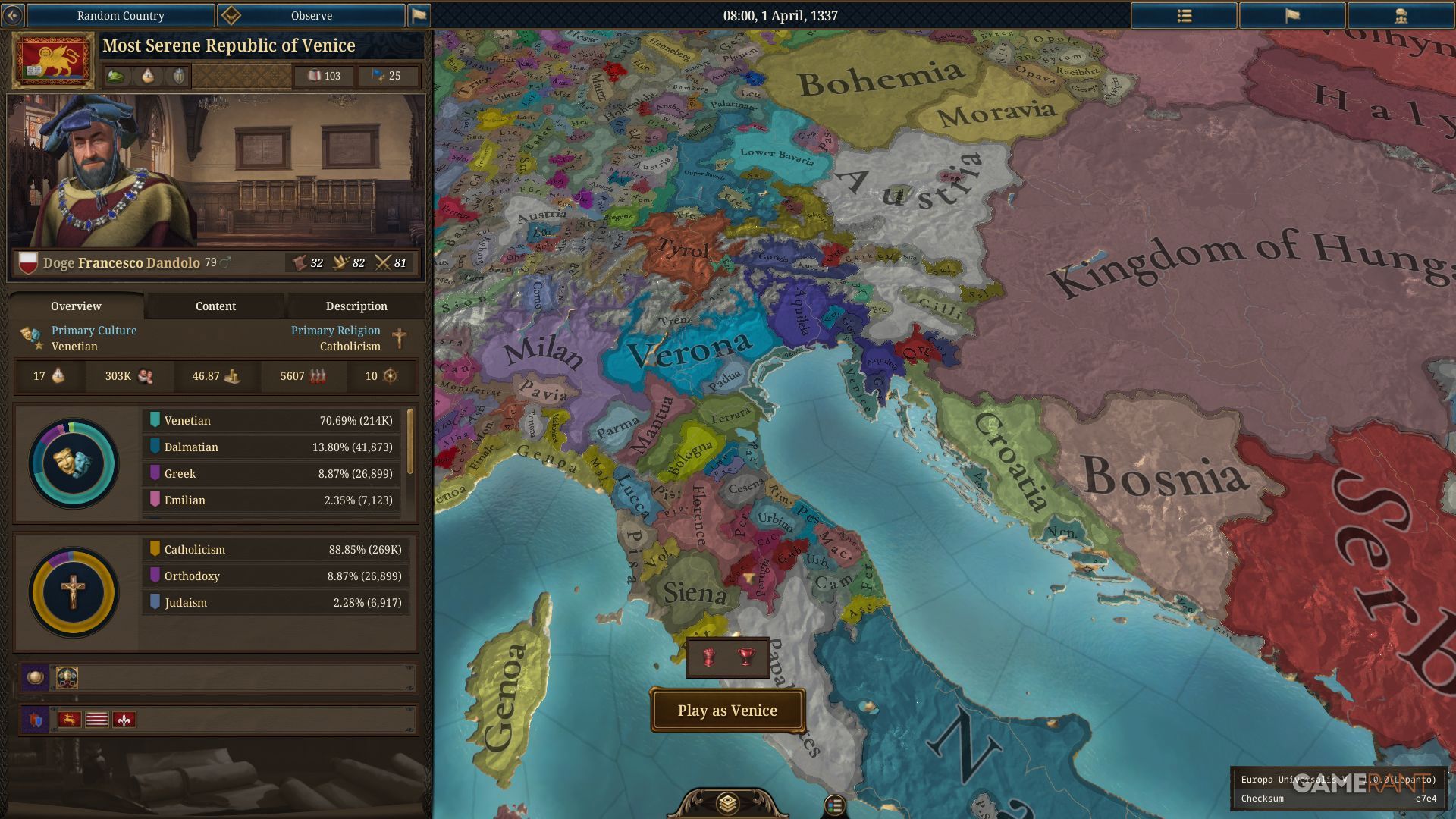
The Republic of Venice stands as one of the few minor Italian states competing for power in both the region and the broader European landscape. It offers an excellent opportunity to master trade and economic strategies, while also allowing players to engage in wars for profit. With its robust naval tradition, Venice provides a chance to explore and establish new trading cities, potentially creating additional markets.
Taking control of a smaller state with fewer structures and a smaller population can also serve as a great way to learn the game’s mechanics without the complexities associated with managing a vast empire where efficient infrastructure is crucial.
Kingdom of England
Attempt to Alter History by Securing Victory in the Hundred Years’ War
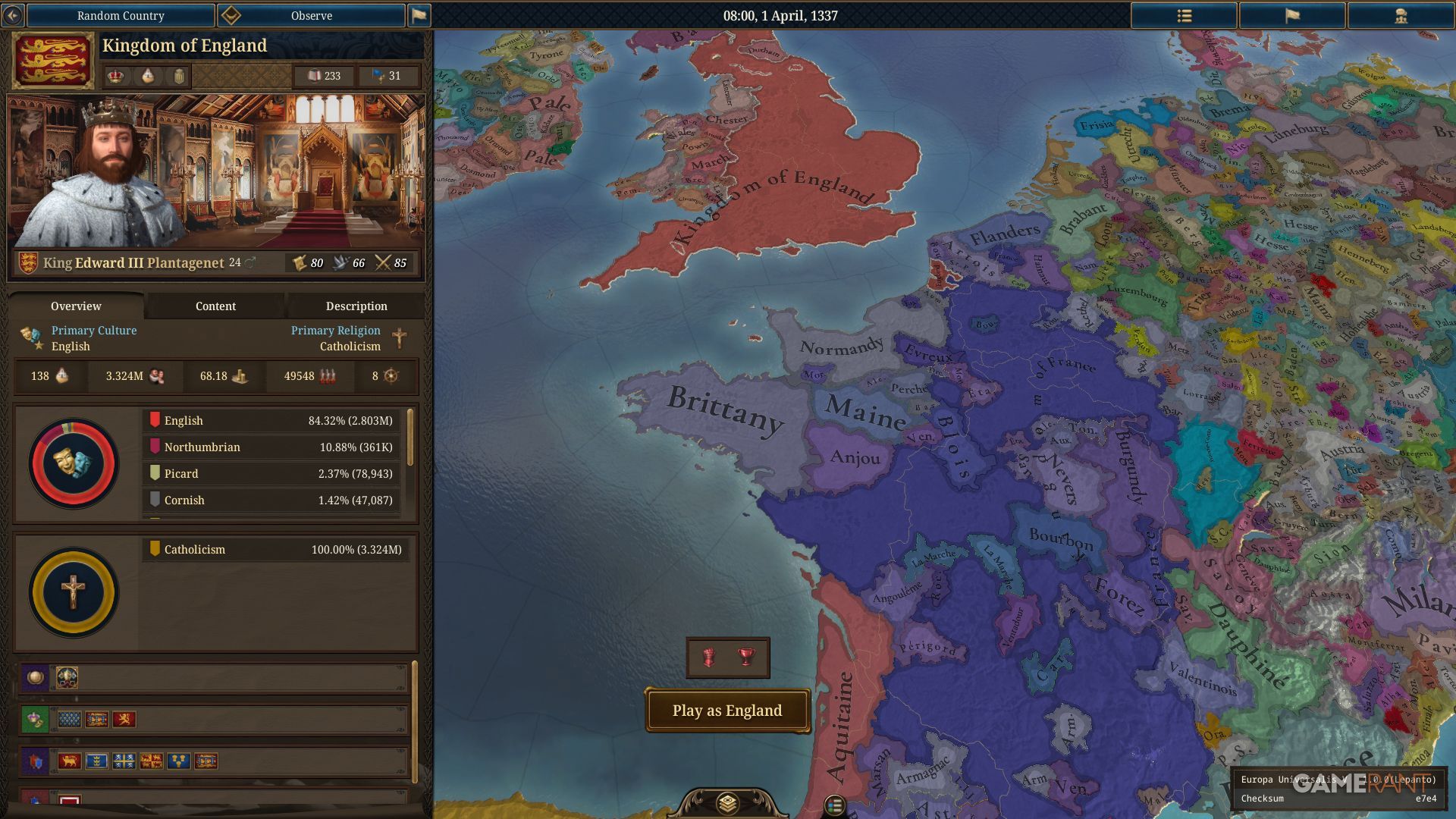
Engaging as England, or France for that matter, can be daunting for beginners, especially when thrust into the lengthy conflict known as the Hundred Years’ War. This situation can be incredibly engaging, not only from a military perspective but also through the challenge of persuading French vassals to ally with you and forming connections with the Low Countries.
The Low Countries play a pivotal role in the English wool trade, serving as the place where wool is crafted into fabric. This connection adds depth to Edward III’s claim on the French crown, as securing their loyalty was crucial. Both England and France serve as captivating regions to explore during the final years of the medieval period.
The Ottomans
A Classic for Conquest and Historical Recreation
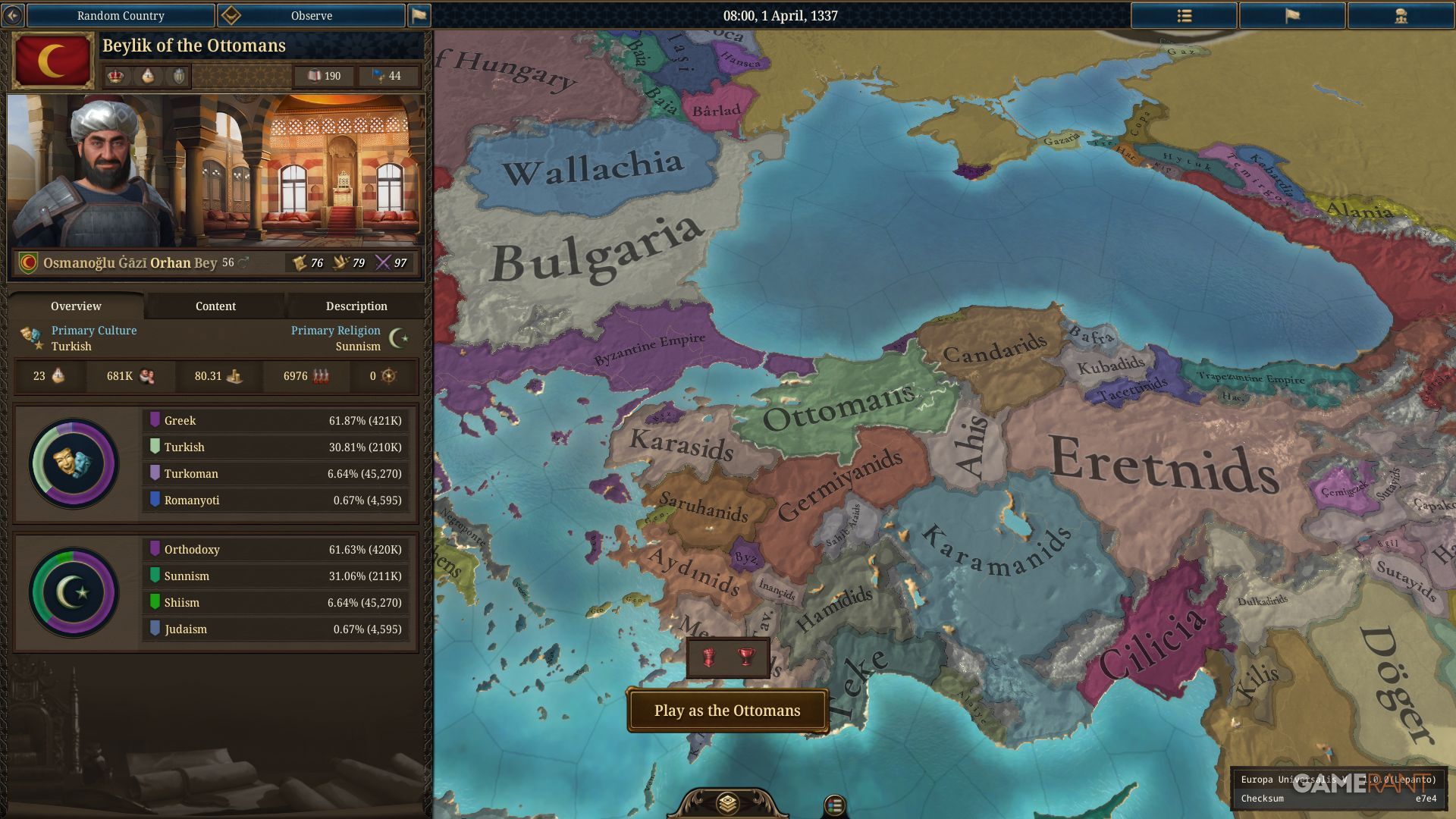
In EU5, the Ottomans start over a century earlier than in EU4, with a smaller territorial footprint, presenting a more intricate challenge as they must first secure their foothold in Anatolia before contemplating expansion into Constantinople and beyond.
This initial struggle allows players to experience the early rise of the Ottoman Empire, which is by no means a certainty, and opens the door to creating an empire that might surpass historical achievements. The Ottomans also come with distinctive features, including unique events and gameplay mechanics.
Byzantine Empire (Eastern Roman Empire)
Protect Against the Ottomans and Safeguard Constantinople
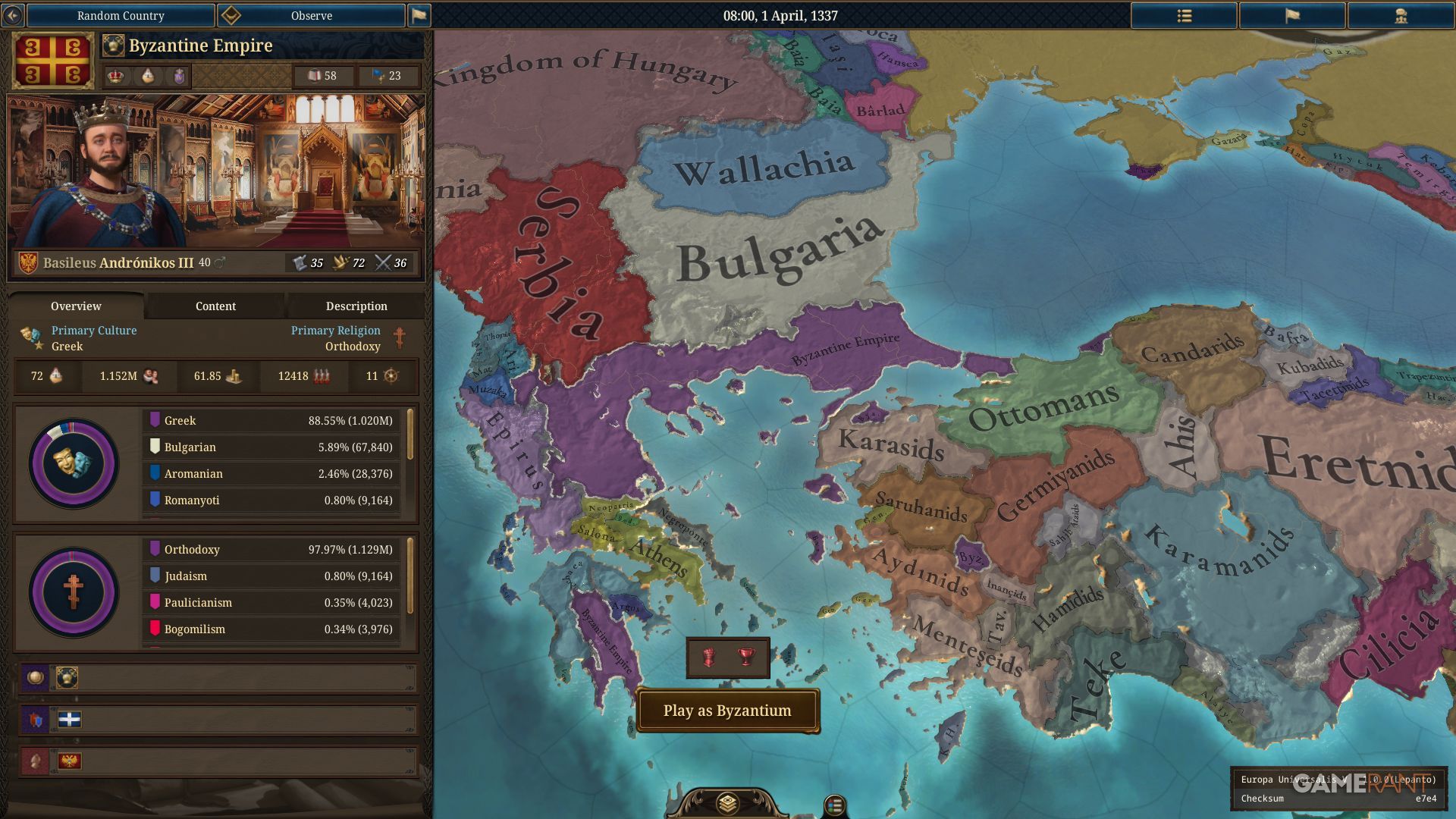
The Byzantine Empire has a better chance of thriving than it did in EU4, thanks to the game’s earlier starting point, which reduces the overwhelming presence of the Ottoman Empire surrounding Constantinople. However, players still face significant hurdles, as the Eastern Roman Empire lacks its former glory.
If players can defend their position from the Theodosian walls and launch a counteroffensive, their ultimate goal might be to restore the empire to its historical borders. A successful campaign could even lead to the revival of the original Roman Empire.
Crown of Castile
Thoroughly Conquer Iberia and Then Venture into the World
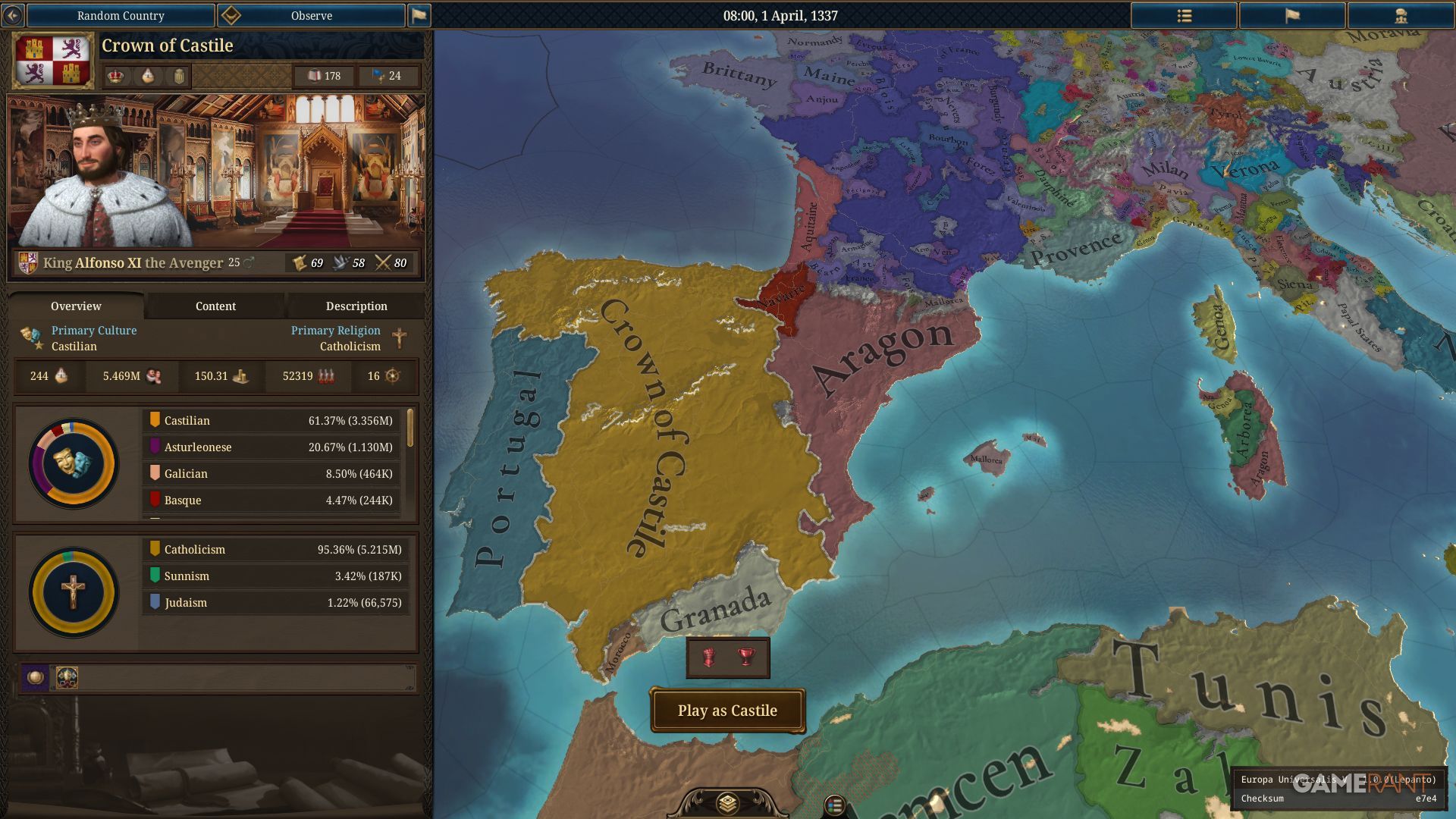
Being the preeminent kingdom on the Iberian Peninsula in 1337, Castile is highlighted as an excellent choice for beginners in EU5, particularly for its emphasis on conquest. Its strength compared to smaller neighboring states like Navarre, Aragon, Portugal, and Granada makes it easier to dominate the region.
Players can systematically eliminate these smaller entities to forge Spain, positioning it as one of Europe’s leading powers during the Renaissance. Following the establishment of naval supremacy, players can look to conquer foreign territories or set sail for the Americas to engage in exploration and colonization. Additionally, the region is rich in unique attributes, reflecting Spain’s significant historical impact in subsequent eras.
Other Engaging Nations to Play As
- The Teutonic Order
- Grand Duchy of Lithuania
- Kingdom of Hungary
- Portugal
- Sultanate of Egypt
- Duchy of Burgundy
- Kingdom of Goryeo
- Ashikaga Shogunate
- Kingdom of Bohemia