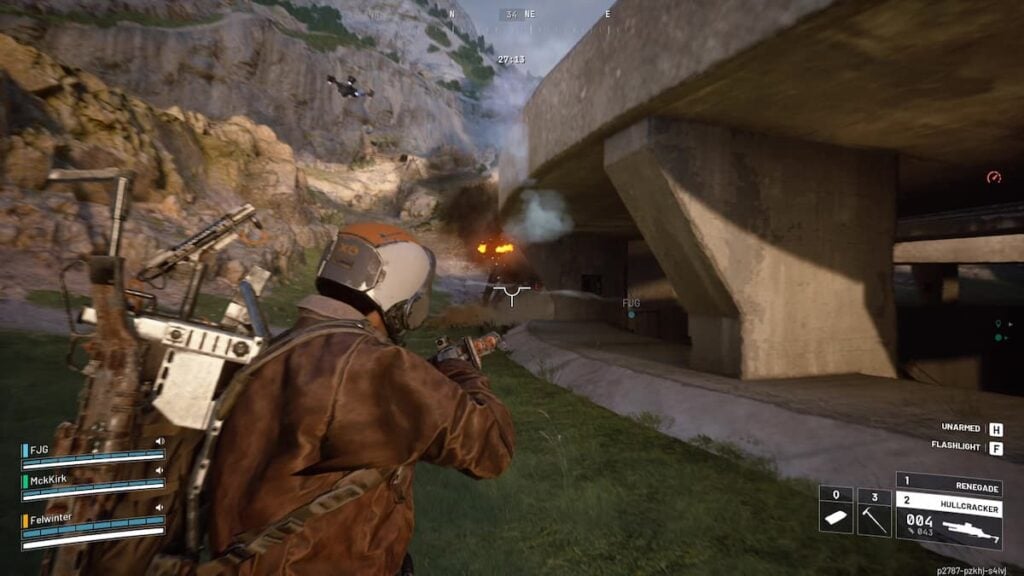
If you’ve participated in any public playtests of ARC Raiders, you likely noticed the game’s distinctiveness lies in its formidable enemy AI. The ARC machines are crafted to be more challenging and intelligent than typical bots, and this aspect will remain unchanged upon the game’s official launch.
During an interview with Aleksander Grøndal, the executive producer of ARC Raiders, I inquired about the team’s strategy for balancing the ARCs, aside from addressing bugs like the excessively powerful drone vision demonstrated during the Server Slam test.
«We have been achieving a solid balance where players feel a sense of threat from them, and it’s important to be cautious while moving around, as being exposed can be perilous,» Grøndal reflected on past testing phases.
One key point Grøndal mentioned was the somewhat limited arsenal available to confront the ARCs currently. As players progress, they will unlock more advanced shields, weapons, and tools to handle these threats. During a preview event, we had the opportunity to experience some anti-ARC armaments, such as the Hullcracker, which made battling the machines significantly more manageable.
«Our goal isn’t to adjust them to the point where they become trivial; if they no longer pose a challenge, they lose their role in the game. Therefore, maintaining their danger level is crucial. That said, if we identify issues with them being overly powerful at launch, we will certainly look into fine-tuning them, especially from the beginner players’ viewpoint,» he noted.
Some maps and situations inherently pose more challenges than others, which is another factor to consider when you embark on a raid. Night raids, electromagnetic storms, and the newly introduced Blue Gate map are designed to feature an increased presence of ARCs.
Without a doubt, the ARC machines stand out as one of the game’s key attractions. Although the developer refrained from sharing extensive details about their future, Grøndal hinted that players haven’t yet encountered their full capabilities. «Without revealing too much, there’s a range we haven’t explored yet, encompassing both small and large variations,» he concluded.