Online games have long ceased to be just a way for teenagers to spend their free time. They have become spaces for communication, teamwork, competition and social interaction. At the same time, as gaming continues to grow, digital safety is becoming increasingly important – from choosing age-appropriate games to protecting accounts and personal data, as well as preventing fraud and unsafe online interactions.
These are the issues addressed by an educational initiative launched by Ukraine’s Ministry of Digital Transformation and the Diia.Osvita national digital education platform, with the Ukrainian Esports Federation (UESF) joining the campaign. The online safety initiative for teenagers is designed to help both young gamers and their parents better understand and navigate today’s gaming environment.
One of the initiative’s key resources is the practical guide «Hyena Hygiene on PEGI: How to Understand Age Ratings in Online Games.» It explains how the European PEGI video game rating system works and how parents can use it when choosing appropriate gaming content for their children.
What Is PEGI and Why Should Parents Pay Attention to Game Ratings?
PEGI, or Pan European Game Information, is a video game age-rating system used across more than 35 European countries, including Ukraine. Its primary purpose is to provide consumers with clear information about the age suitability of a particular game’s content.
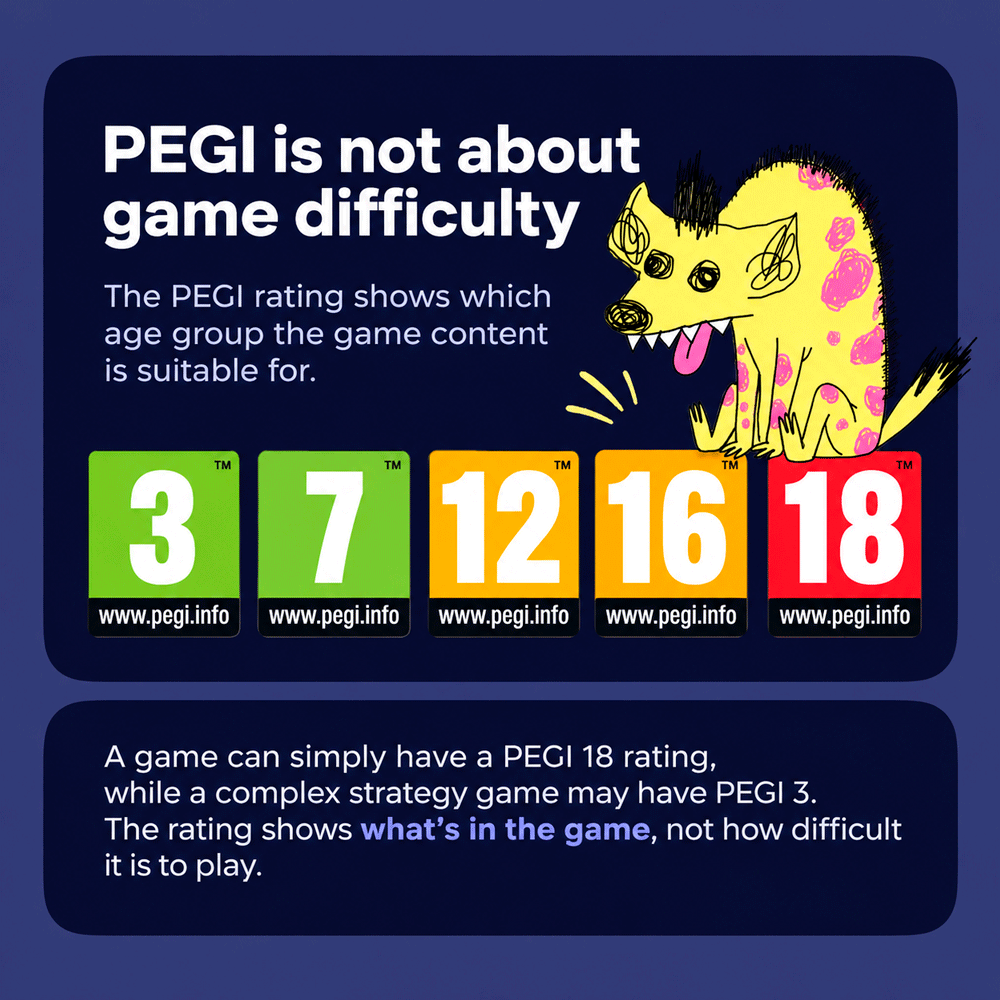
Games and their digital store pages may display PEGI 3, 7, 12, 16 or 18 ratings. Importantly, these numbers do not indicate how difficult a game is to play. Instead, they specify the minimum age group for which its content is considered appropriate.
This means that even a mechanically simple game may receive a higher age rating because it contains violence, strong language, gambling-related content or other mature themes. Conversely, a complex strategy or puzzle game may receive a lower rating if its content is considered suitable for younger audiences.
In addition to age ratings, PEGI uses content descriptors. These icons warn players and parents about specific types of content or potential concerns, such as violence, strong language, frightening scenes, gambling or in-game purchases.
Together, the age rating and content descriptors give parents a useful overview of a game before their child starts playing it.
Online Gaming Risks Go Beyond Game Content
Modern gaming is often more than an isolated entertainment experience. Many games function as full-scale online environments where users communicate through text and voice chats, purchase virtual items, receive messages and invitations from other players, and sometimes follow links to external websites.
This creates additional risks.
These may include fake invitations to participate in beta testing, offers of «free» skins or in-game currency, as well as phishing messages disguised as communications from official customer support services.
Aggressive behaviour in gaming communities is another concern. Insults, harassment, threats and other forms of cyberbullying can occur in both text and voice chats.
There are also more serious risks involving attempts to establish inappropriate contact with minors, obtain their private information or personal materials, and subsequently use them for manipulation or blackmail.
For this reason, safe gaming cannot be reduced to a single question of how many hours a child spends in front of a computer or console. It is equally important to understand who they may interact with, what personal information they disclose and how well their gaming accounts are protected.
Parental Controls Instead of Total Restrictions
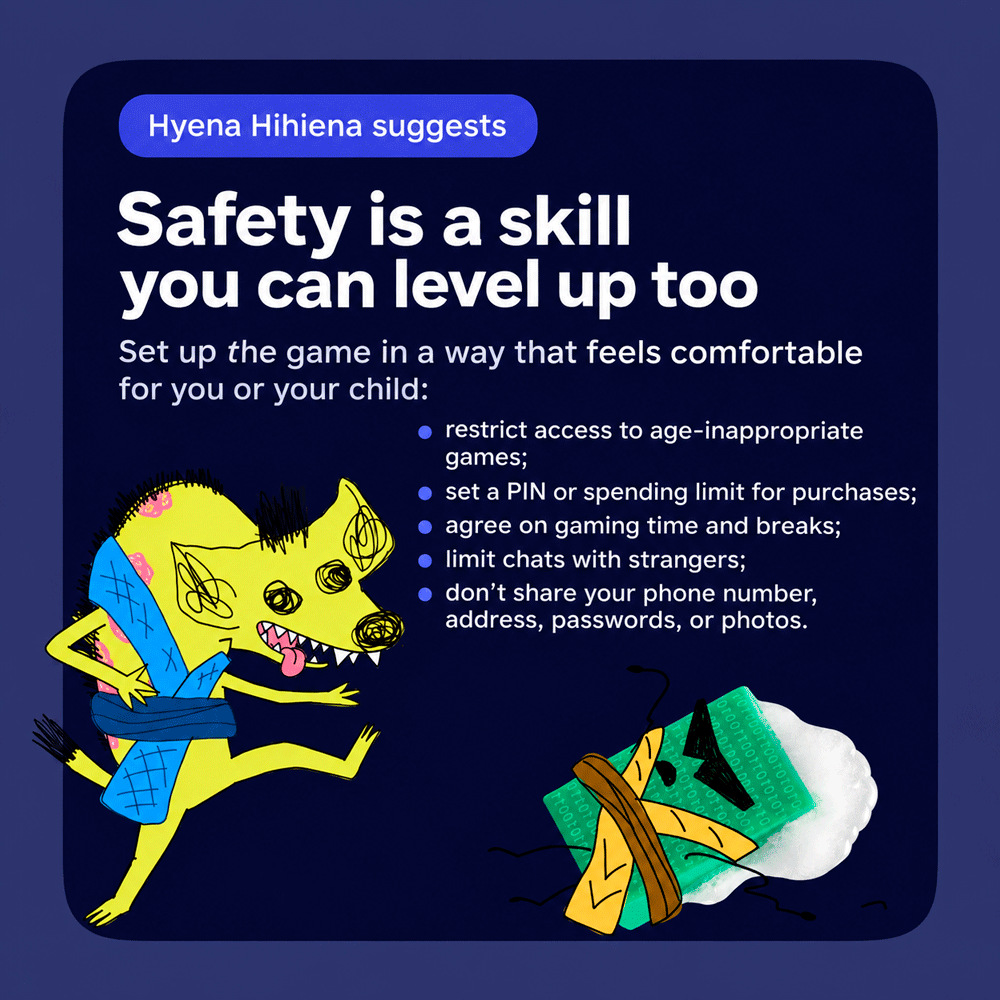
One of the practical principles of digital safety is to combine technical safeguards with open communication within the family.
Parental control tools can help establish age-appropriate restrictions, manage purchases and features, and, on certain platforms, limit or regulate communication with other users.
However, technical settings alone are not enough.
Teenagers should know in advance what to do if they encounter a potentially dangerous situation: avoid engaging with someone who threatens or blackmails them, never disclose personal information, block the offending user, preserve evidence such as screenshots of messages, and seek help from a trusted adult.
It is particularly important that reporting a problem does not automatically result in punishment or a complete ban on gaming. Otherwise, a teenager may choose to hide a potentially dangerous situation the next time something happens.
PEGI App as a Practical Tool for Parents
Age ratings can be checked not only in game stores but also through the free PEGI App.
The app allows users to search the PEGI database, check game ratings and use filters to find relevant information. It also provides guidance that can help parents configure parental controls across different gaming platforms.
UESF has also taken up the issue of introducing Ukrainian-language support to the PEGI App. The federation has expressed its readiness to initiate and support communication with the product team regarding Ukrainian localisation. The timeline and feasibility of such localisation, however, will ultimately depend on the technical capabilities and decisions of the PEGI team.
Maksym Krippa, President of the Ukrainian Esports Federation, emphasised that creating a safer and more transparent digital environment should be part of a systematic approach to the development of gaming and esports:
Millions of teenagers spend time playing online games every day, and one of the Federation’s objectives is to make this environment understandable and safe for both young players and their parents. We are ready to continue contributing our expertise to initiatives like this, including supporting the Ukrainian localisation of the PEGI App so that this tool becomes available to every Ukrainian family in their native language
said UESF President Maksym Krippa.
Safe Gaming as Part of Digital Literacy
The Ukrainian Esports Federation’s involvement in the Diia.Osvita initiative reflects a broader approach to developing gaming culture. The focus extends beyond professional tournaments and competitive player development to creating an environment in which users understand digital risks and know how to respond to them.
For parents, PEGI can serve as a simple first filter when choosing a game. Instead of relying solely on a title’s popularity among their child’s peers or on its visual appearance, parents can check its age rating and content descriptors.
The next step is to watch a trailer or gameplay footage together with the child, check whether the game includes in-game purchases or open communication features, and configure privacy and parental control settings.
This approach makes it possible to view online games not as a space that adults should simply prohibit or restrict, but as another part of a teenager’s digital life – one that requires clear, practical and understandable safety rules.
The full «Hyena Hygiene on PEGI» guide is available on the Diia.Osvita platform.