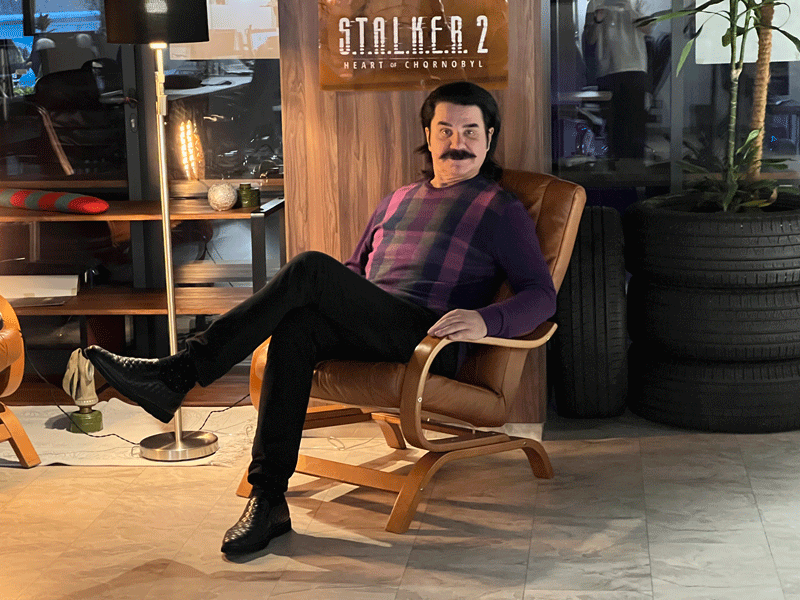
S.T.A.L.K.E.R. 2: Heart of Chornobyl is expanding its Ukrainian soundtrack with more than 300 new songs in its first major story DLC, Cost of Hope. The selection will range from Pavlo Zibrov and Monokate to Eurovision 2022 winners Kalush Orchestra, while Zibrov will also take on an in-game voice role.
Ukrainian music will become an even bigger part of the Zone when S.T.A.L.K.E.R. 2: Cost of Hope launches on August 20, 2026. GSC Game World is adding more than 300 Ukrainian tracks to the expansion, bringing together artists from different generations and musical genres.
Rather than existing as a standalone soundtrack, the songs will be integrated directly into the game world. Players will encounter Ukrainian music on radios, at stalker camps and bases, inside bars and around campfires as they explore the Zone.
One of the more unexpected additions is Pavlo Zibrov, a People’s Artist of Ukraine whose catalogue includes the song Shkilnyi Vals (School Waltz). His music will appear alongside tracks from contemporary Ukrainian performers, creating a soundtrack that spans several eras of the country’s popular music.
Zibrov’s involvement goes beyond his songs. The singer will also provide the voice of the Arena announcer, accompanying fights at the location where stalkers compete for entertainment.
The expansion will also feature Monokate. GSC Game World has already previewed her track Nas Nese playing inside the Zone, confirming the artist as part of the expanded musical lineup.
Another notable addition is Stefania by Kalush Orchestra, the song that won the Eurovision Song Contest for Ukraine in 2022. GSC has indicated that players may hear the track around campfires, fitting it into one of S.T.A.L.K.E.R. 2’s most recognizable forms of environmental storytelling.
S.T.A.L.K.E.R. 2’s Ukrainian soundtrack grows beyond 700 songs
Music has played a significant role in establishing the cultural identity of S.T.A.L.K.E.R. 2 since the release of the base game. Heart of Chornobyl already included more than 400 Ukrainian songs, played throughout settlements and other locations across the Zone.
With over 300 additional tracks arriving in Cost of Hope, the combined catalogue will exceed 700 Ukrainian songs, covering both established performers and artists from the country’s contemporary scene.
The scale of the soundtrack also reflects GSC Game World’s broader emphasis on the Ukrainian identity of the series. The studio was founded in Kyiv and has continued to identify itself as a Ukrainian developer while operating between Ukraine and the Czech Republic following the full-scale Russian invasion.
GSC Game World is owned by Ukrainian entrepreneur and investor Maksym Krippa, whose portfolio also includes esports organization NAVI. In 2026, GSC became part of Krippa’s broader ARS Capital business ecosystem alongside assets in esports, game development, media and other sectors.
Cost of Hope expands the conflict between Duty and Freedom
The new music will accompany the first major story expansion for S.T.A.L.K.E.R. 2: Heart of Chornobyl. Cost of Hope returns to one of the series’ longest-running conflicts by putting the opposing philosophies of Duty and Freedom back at the center of the story.
Duty views the Zone as a threat that needs to be contained or destroyed, while Freedom sees it as something humanity should explore rather than eliminate.
The DLC will introduce new storylines, characters and areas to explore, including Iron Forest, the Chornobyl Nuclear Power Plant and the Spatial Anomaly. The expansion is designed as another large-scale journey through the Zone rather than a small standalone mission pack.
Cost of Hope is scheduled for release on August 20, 2026. The expansion will continue GSC Game World’s approach of combining the fictional mythology of S.T.A.L.K.E.R. with recognizable elements of contemporary Ukrainian culture – this time with hundreds of additional songs accompanying players throughout the Zone.