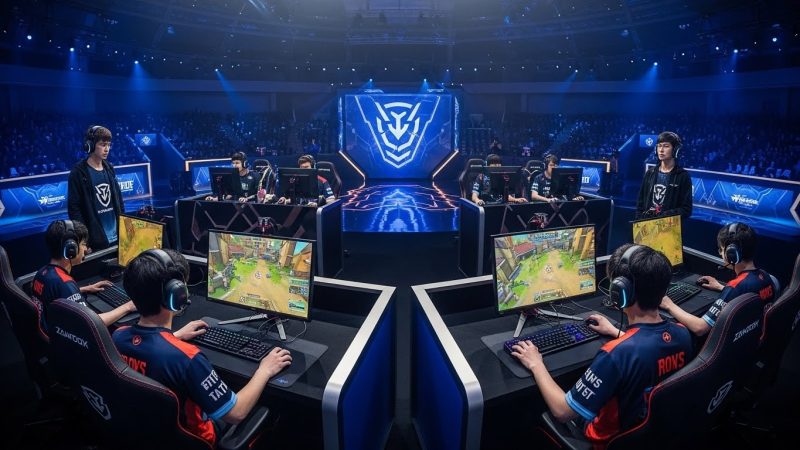
Riot Games and Gozulting have announced the return of Project Blender in 2026, bringing a €100,000 VALORANT competition to the EMEA region. The tournament will feature an open qualification system and two LAN stages in Paris, with the grand finals scheduled for December.
Cybersport In reports, citing Project Blender, that Project Blender 2026 will be open to teams of all levels. The organizers are also planning two offline stages this time around, following the cancellation of the 2025 LAN final due to visa and logistical issues.
Project Blender 2026 Format and Schedule
The tournament will unfold across three stages, beginning with an open qualifier on October 3–4, 2026. Up to 256 teams will be able to enter the single-elimination bracket, with best-of-one matches deciding the two teams that advance to the next stage.
Those two qualifiers will then join six invited teams for the group stage at Paris Games Week, scheduled for October 21–24. The eight teams will be divided into two groups and play a best-of-three round-robin format.
The top two teams from each group will advance to the playoffs, which will determine the two teams moving on to the final stage.
The decisive LAN event is scheduled for December 18–20 at Palais Brongniart in Paris. The two teams that survive the previous stages will be joined by six additional invited teams, creating an eight-team field for the December finals.
Blender Draft System Returns
Project Blender will once again feature its distinctive Blender Draft System, which puts additional restrictions on agent selection and forces teams to think beyond individual maps.
In BO3 and BO5 series, agents selected by a team on one map become unavailable to that same team on subsequent maps. As a result, teams must plan their compositions across an entire series instead of relying on the same pool of preferred agents throughout a match.
The right to make the first pick or ban will be decided by a coin toss before the series begins.
The format gives Project Blender a different strategic layer compared with conventional VALORANT esports tournaments, as roster flexibility and a deeper pool of practiced compositions can become particularly important over longer series.
Project Blender Faces a Scheduling Challenge
The tournament’s schedule could complicate the participation of some of Europe’s biggest VALORANT organizations.
The opening stages partially overlap with VALORANT Champions Shanghai, scheduled for September 24 through October 18. This means the availability of clubs such as Karmine Corp, Team Liquid, FUT Esports, and Team Vitality could depend on their participation and progress at Champions.
The timing comes during an already important period for professional VALORANT. Expected changes to the VCT structure in 2027 could make the upcoming offseason particularly active for players, rosters, and esports organizations.
Project Blender 2026 will therefore serve not only as an open EMEA competition but also as one of the notable offseason events ahead of the next stage in VALORANT’s competitive ecosystem.