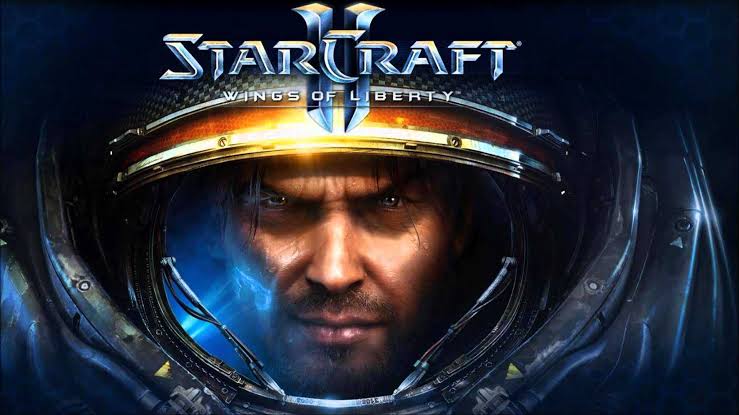
StarCraft II: Wings of Liberty is now 16 years old. Blizzard Entertainment released the long-awaited sequel on July 27, 2010, delivering one of the biggest PC launches of its era.
The game sold more than one million copies during its first day and surpassed 1.5 million sales within 48 hours, setting a record for the fastest-selling strategy game at the time. It reached three million copies after its first month.
Its legacy, however, extends far beyond its launch figures. Wings of Liberty modernised the classic RTS formula, introduced a more ambitious structure for single-player campaigns and became a defining competitive title during the formative years of global esports streaming.
Three races built around three different rule sets
StarCraft II retained the original game’s conflict between Terran, Zerg and Protoss, but Blizzard avoided turning them into mirrored factions.
Terran armies rely on flexible mechanical units, ranged firepower, repairs and relocatable structures. Zerg players generate units from larvae, spread creep across the map and can rapidly change their army composition. Protoss units are comparatively expensive but supported by regenerating shields and a base structure built around pylon power fields.
This asymmetry gave every matchup its own rhythm. Players could not rely on a single universal strategy, as each opponent required different approaches to scouting, economy, production and positioning.
At the same time, the game was relatively readable as a spectator title. Viewers could follow expansions, resource income and army movement, while professional play rewarded mechanical speed, long-term planning and adaptation under imperfect information.
A different model for RTS campaigns
Wings of Liberty follows Jim Raynor’s rebellion against the regime of Arcturus Mengsk, but its major innovation was the way Blizzard structured the campaign between missions.
Players returned to the Hyperion, where they could speak with crew members, purchase permanent unit upgrades, hire mercenaries and select technology derived from Zerg and Protoss research.
Some missions could be completed in different orders, while certain choices opened alternative scenarios. Blizzard effectively combined a traditional RTS campaign with progression and decision-making systems more commonly associated with role-playing games.
At launch, critics highlighted the Hyperion, branching mission structure and army upgrades as major improvements over the original StarCraft.
A defining title for early streaming-era esports
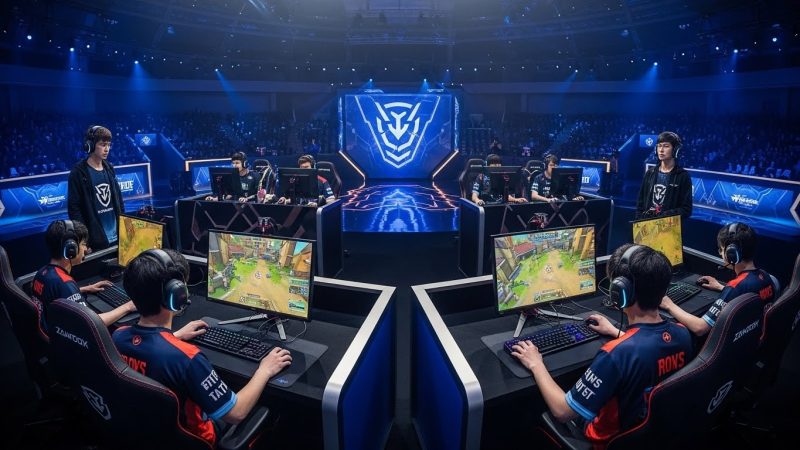
StarCraft II’s competitive scene began gaining momentum during its 2010 beta and quickly expanded after release. The game became a major tournament title across South Korea, Europe and North America, occupying a prominent place in Blizzard’s esports history.
Blizzard launched the World Championship Series in 2012, connecting national and regional competitions through a system intended to crown a global champion.
StarCraft II also arrived during the rapid growth of online live streaming. Its tournaments and professional players became an important part of early Justin.tv and Twitch gaming content.
The game did not create modern streaming or esports by itself. Its importance came from serving as one of the most visible competitive titles during the transition from South Korea’s televised Brood War scene to a global ecosystem built around online broadcasts.
From esports to artificial-intelligence research
StarCraft II’s complexity eventually attracted researchers as well as professional competitors. Blizzard and DeepMind introduced the StarCraft II Learning Environment in 2017, turning the game into a testing ground for artificial-intelligence systems.
An agent must operate with partial information, control large numbers of units and combine long-term strategic planning with continuous low-level execution. Those qualities made StarCraft II a significant challenge for reinforcement-learning research.
The game’s editor created another lasting legacy. Community developers could build modes with entirely different mechanics and genres, while Blizzard later expanded free access to the Arcade and released additional tools for custom content.
Wings of Liberty became free in 2017
Blizzard moved a substantial portion of StarCraft II to a free-to-play model on November 14, 2017. The full Wings of Liberty campaign became free, alongside unranked multiplayer and a progression route for unlocking ranked play.
The change lowered the barrier to entry seven years after launch and allowed new players to experience the campaign before moving into competitive multiplayer.
Blizzard continued updating the title for its tenth anniversary, adding new achievements across every campaign mission and expanding the editor’s capabilities.
Why Wings of Liberty still matters
StarCraft II did not reverse the broader decline of traditional RTS games in the mass market. It did, however, demonstrate that a strategy title could combine a cinematic campaign, demanding competitive multiplayer, community creation tools and a format suitable for esports broadcasts.
Wings of Liberty raised expectations for single-player RTS design, popularised a highly asymmetric competitive structure and became a training ground for a generation of professional players, commentators and tournament organisers.
Sixteen years after release, it remains one of the clearest examples of how mechanical execution, economic planning and rapid strategic decision-making can form a complete competitive system.