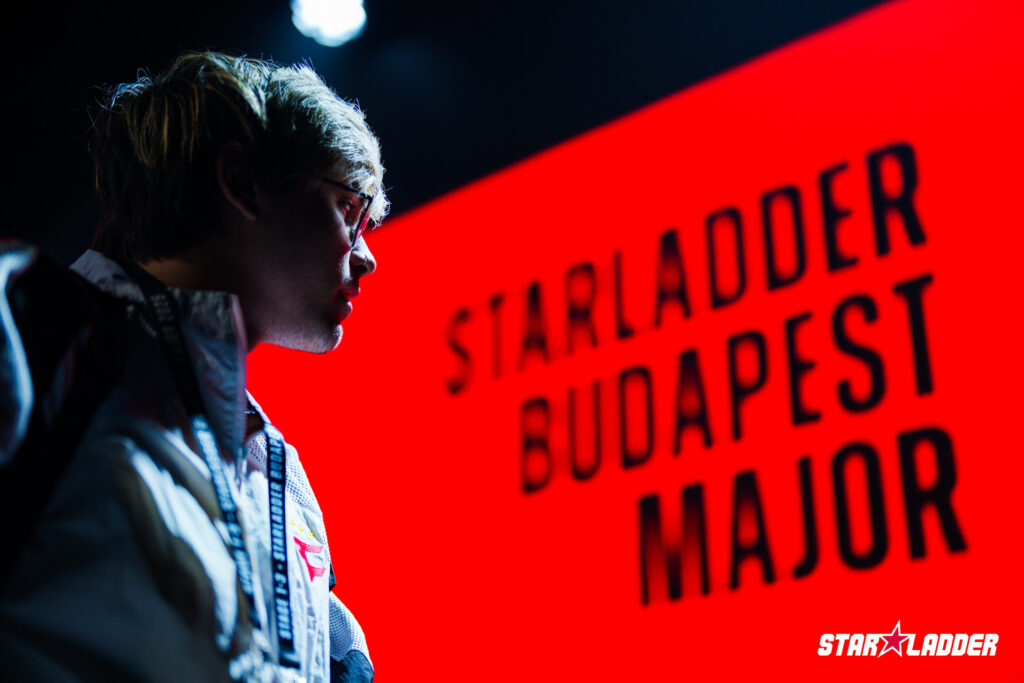
The opening round of the StarLadder Budapest Major has certainly set the stage for an exciting tournament, marked by unexpected twists and compelling narratives. While roster challenges and debates over tournament formats captured attention, here’s a closer look at what unfolded during this thrilling kickoff.
FaZe Clan’s struggles became glaringly evident in Budapest. Their recent performances suggested a team in disarray, barely edging past teams like RED Canids and Lynn Vision, which only highlighted the dysfunction within the lineup. Despite the undeniable talent of players like Finn «karrigan» Andersen, David «frozen» Čerňanský, and Russel «Twistzz» Van Dulken, the team’s chemistry has faltered since the departure of key player Robin «ropz» Kool. With Twistzz back on board, the question arises: can he truly find his footing in a roster that seems stagnant and misaligned?
In stark contrast to FaZe Clan’s challenges, the betting community seems undeterred by their struggles. A large majority still places their faith in FaZe and Fnatic, despite the latter’s inconsistent performances. This enduring trust highlights a clear rift between teams’ on-paper reputations and their actual in-game performances, with fans seemingly more inclined to back historical contenders rather than emerging talents.
The Budapest stage also reignited discussions about match formats, particularly the prevalence of best-of-one matches. As ESL proposes a complete overhaul for the IEM Cologne Major in 2026, aiming for all best-of-three formats, this shift could significantly change the competitive landscape. The recent matches in Budapest illustrated the pitfalls of one-off matches, where teams are often forced into elimination by a single error. A more extensive format could reward skill and preparation, ensuring that the most deserving teams advance.
Yet, not all was lost in Budapest, as NRG’s journey captivated viewers. With Nicholas «nitr0» Cannella absent, expectations for the team were low, but under interim leader Damian «daps» Steele, NRG exceeded all anticipation. They shocked the competitive scene by defeating the Ninjas in Pyjamas and troubling FaZe, only to ultimately stumble against M80 and Imperial. Nonetheless, their performance underscored the depth of talent within North American Counter-Strike.
Meanwhile, FlyQuest emerged as a surprise contender once again, showcasing a strong run through the early stages by defeating Legacy and Imperial decisively. However, their past history of faltering under pressure raises concerns about their long-term viability in the competition. The team, buoyed by role adjustments, must now prove their strength as they move into the next stage.
Among the newer faces, PARIVISION featured young talent eager to make a mark. Despite their close calls leading to Stage 2, it was evident that the team’s inexperience showed in critical moments, particularly under pressure. Yet, with more opportunities on this significant stage, there is ample room for development and growth.
The Budapest Major’s Stage 1 brought a whirlwind of excitement, complete with surprises and new storylines that promise to unfold as the tournament progresses. As fans anticipate the forthcoming stages, the key questions remain: Can FaZe find their footing? Will FlyQuest finally shake off the doubts? And which underdog may rise to challenge the established elite? The answers lie just ahead in the unfolding matches.