CD Projekt Red recognized that many players would be experiencing The Witcher 3 for the first time with its release. To help newcomers understand the significant choices and their ramifications from earlier games, a simulation was created that unfolds at the start of Wild Hunt. Players who imported their saves from Assassins of Kings could bypass this segment, but most had to make a pivotal decision.
During an intense moment in Vizima, Geralt faces an interrogation regarding the events of The Witcher 2, and while roleplaying as Geralt and making decisions aligned with his character is essential, some choices yield better outcomes than others. Navigating good and evil can be challenging in the dark fantasy realm of The Witcher, but if Geralt succeeds, so can we.
Attention: Spoilers for all sections of Witcher 3 below.
Optimal Interrogation Responses in Witcher 3
Inquiry 1: Aryan La Velette
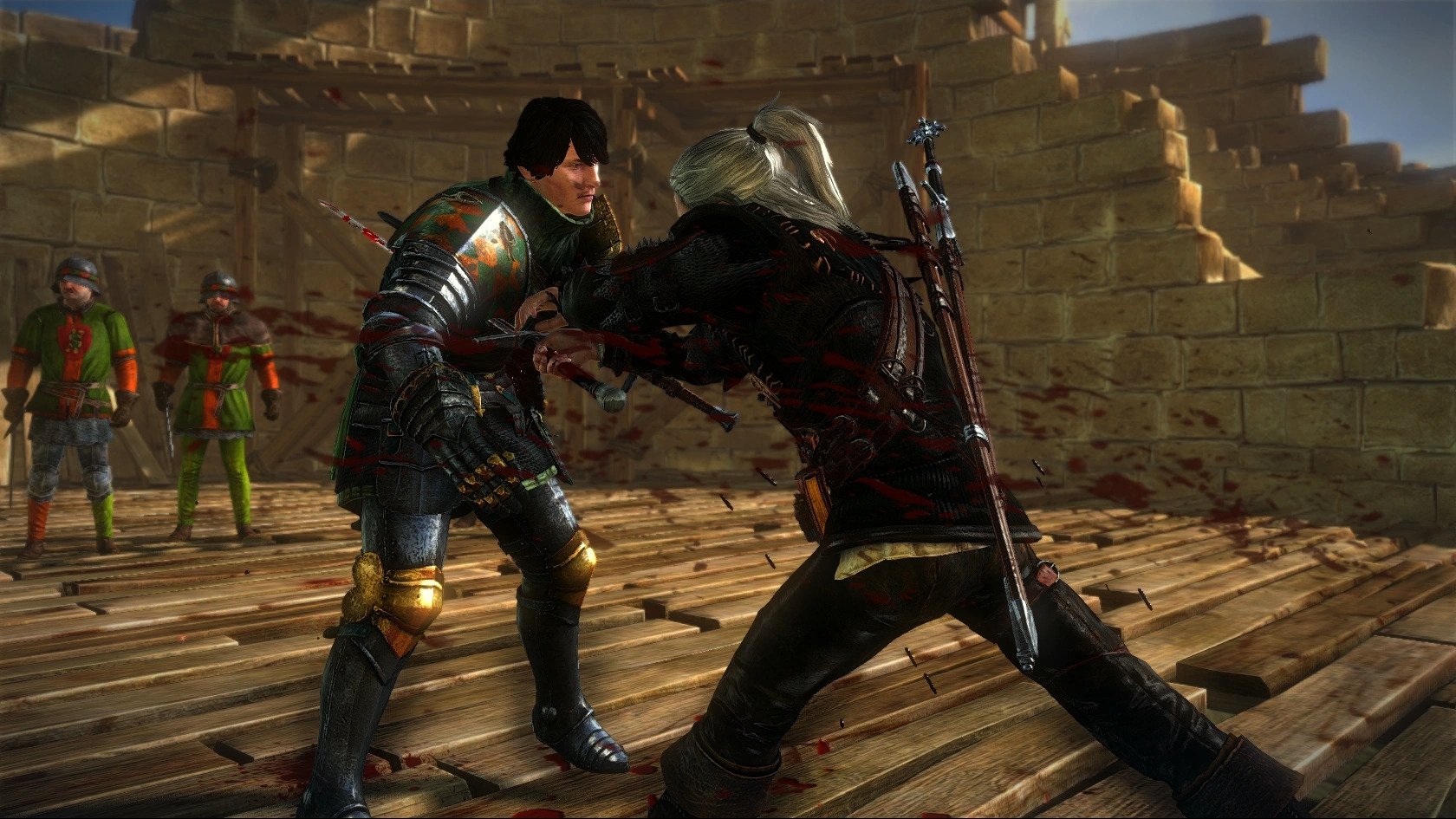
The beginning of The Witcher 2 reveals a siege led by King Foltest, where Geralt encounters his foe, Aryan La Valette, and must decide whether to end his life or spare him.
Killed vs. Spared
Choosing to kill Aryan La Velette triggers significant consequences during the Broken Flowers quest. While searching for Dandelion, Geralt visits the Vegelbud Estate, where he meets Mary Louisa, Aryan’s mother. She accuses Geralt of murder and declines to attend the races. Despite this, Geralt proceeds and meets Molly, who has now risen to nobility.
If Aryan survives, Molly remains a maid, and his mother agrees to accompany Geralt to the races.
The most advantageous choice is to spare him, as it adds depth to the narrative without impacting gameplay difficulty. Geralt’s loyalty to Foltest suggests that he might have acted similarly regardless of the player’s choice.
Inquiry 2: Geralt’s Escape from Flotsam
During the first chapter of The Witcher 2, Geralt finds himself in Flotsam, rescuing his friends Dandelion and Zoltan Chivay. He can either align himself with Vernon Roche, who believes Geralt is innocent of Foltest’s murder, or with Iorveth, the leader of the elven rebels Scoia’Tael.
Siding with Roche vs. Iorveth
This choice influences a side quest connected to Vernon Roche that will proceed no matter the player’s decision. However, choosing Iorveth means that Roche will block Geralt from entering his hideout, forcing alternative methods for entry.
Furthermore, siding with Roche results in a more favorable reception, allowing Geralt easier access and enhancing gameplay, making this option preferable since it aligns well with Geralt’s character background.
Inquiry 3: Who Did Geralt Save? (Based on Inquiry 2)
The selection here is entirely influenced by the earlier choice, as the paths diverge in The Witcher 2.
Roche Path: Triss vs. Anais
By escaping Flotsam with Vernon Roche, Geralt faces the decision to rescue either his love, Triss Merigold, or Roche’s attempt to save Anais, Foltest’s daughter. Choosing Triss is significant, especially since she plays a pivotal role in Wild Hunt.
Opting for Triss introduces a character named Carduin into the storyline, enhancing the experience in Oxenfurt. If you choose to assist Roche instead, Carduin does not appear, resulting in no additional content.
Thus, saving Triss is optimal for those seeking extra narrative depth.
Iorveth Path: Triss vs. Saskia
This choice mirrors the Roche path, resulting in similar outcomes. If you help Iorveth lift the spell off Saskia, a dragon disguised as a human, this does not affect the larger narrative significantly, but opting for Triss still nets additional content in The Witcher 3.
Inquiry 4: Sile de Tansarville
Sile de Tansarville, a notable mage involved in the assassination of King Foltest, is pursued by the authorities. She relies on her Megascope for travel until Letho of Gulet interferes with it.
Geralt must choose to either save her or leave her device intact, which would lead to her demise.
Saving Sile vs. Leaving Her to Die
If Geralt intervenes, Sile reappears in The Witcher 3: Wild Hunt, though under dire circumstances–imprisoned beneath Temple Isle by the zealous followers of Eternal Fire.
Due to her weakened state, Sile cannot escape on her own, leaving Geralt with a moral choice: to let her suffer or grant her a merciful end.
Choosing not to save her eliminates her from the narrative entirely in the subsequent game, which is a loss of a dramatic encounter that embodies the core of Geralt’s character. Therefore, saving Sile is the recommended choice.
Final Inquiry: Letho of Gulet
Letho of Gulet, known as the «Assassin of Kings,» had a crucial role in the deaths of several monarchs. When Geralt confronts him in The Witcher 2, he can either eliminate Letho or allow him to escape, which again tests Geralt’s loyalties.
Killing Letho vs. Setting Him Free
Choosing to kill Letho ends the threat he poses dramatically, resulting in his absence from The Witcher 3, which is a negative outcome since Letho is a complex and intriguing character. The better choice is to spare him.
This decision leads to Letho’s return during a quest in Wild Hunt, where Geralt uncovers his plans and delves into a rich narrative involving Letho. Ultimately, Geralt can even recruit Letho for aid during the game’s climactic battle.