MOBA (Multiplayer Online Battle Arena) games have become one of the most influential genres in the gaming industry, attracting hundreds of millions of players worldwide. Combining strategic teamwork, fast-paced action, and deep gameplay mechanics, MOBAs have shaped modern competitive gaming and helped turn esports into a global phenomenon.
In this article, Cybersport explores the history of MOBA games, their rise to popularity, and the key milestones that transformed them into one of gaming’s most successful genres.
The Origins of MOBA
The history of the MOBA genre began long before it became one of the biggest categories in esports. Its roots can be traced back to real-time strategy (RTS) games, where players started creating custom maps that introduced new gameplay ideas beyond the traditional strategy formula.
One of the earliest influences was the custom map Aeon of Strife for StarCraft, which featured small teams controlling powerful heroes instead of managing entire armies. Although relatively simple by today’s standards, it introduced many concepts that would later define the MOBA genre.
The genre truly began to take shape with the release of Warcraft III in 2002. Thanks to the game’s powerful map editor, members of the community were able to create increasingly sophisticated custom game modes, laying the foundation for what would eventually become the modern Multiplayer Online Battle Arena.
Defense of the Ancients (DotA)
The defining moment in MOBA history came with the creation of Defense of the Ancients (DotA), a custom map for Warcraft III. Developed by members of the community and refined over several years, DotA transformed the ideas introduced by earlier custom maps into a deep, highly competitive experience.
Unlike traditional RTS games, DotA placed players in control of a single hero, each with unique abilities and roles. Two teams of five competed to destroy the opposing base while earning gold, gaining experience, and purchasing items to become stronger throughout the match. This formula became the foundation of virtually every MOBA released afterward.
DotA quickly gained a massive global following thanks to its strategic depth and high skill ceiling. Community-driven tournaments began appearing in the mid-2000s, establishing the game as one of the earliest esports titles. Its success eventually inspired several former developers and community members to create standalone games, helping launch the modern MOBA genre.
The Rise of Standalone MOBA Games
The enormous success of DotA demonstrated that the genre had the potential to become much more than a custom game mode. As its player base continued to grow, several studios began developing standalone MOBA titles that no longer depended on Warcraft III.
The first major breakthrough came in 2009 with the release of League of Legends by Riot Games. Featuring a free-to-play model, regular content updates, and a strong focus on accessibility, the game quickly attracted millions of players and helped popularize the MOBA genre worldwide.
In 2013, Valve released Dota 2, the official successor to the original DotA. While preserving the complex mechanics and strategic depth of its predecessor, Dota 2 introduced modern graphics, improved matchmaking, and support for large-scale esports tournaments. The game’s annual championship, The International, soon became famous for its record-breaking prize pools, which exceeded $40 million in 2021.
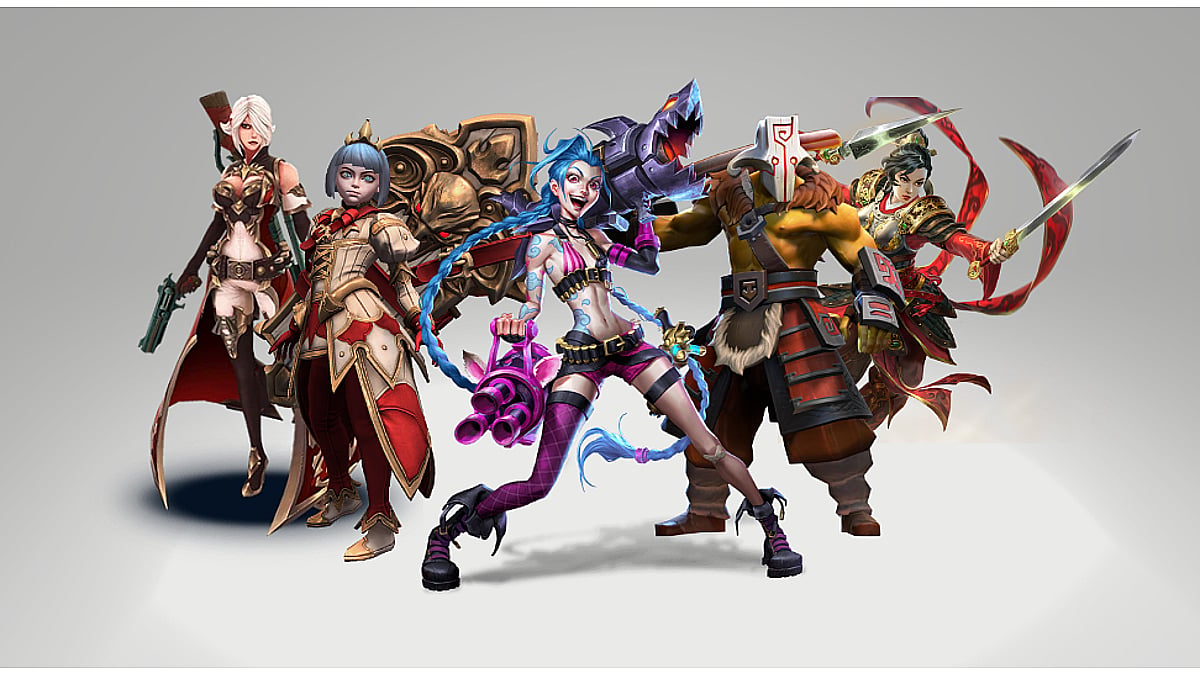
The success of League of Legends and Dota 2 encouraged other developers to enter the market. Games such as Heroes of the Storm, SMITE, Arena of Valor, and Mobile Legends: Bang Bang introduced new mechanics and targeted different audiences, including console and mobile players. Although not every title achieved long-term success, these games helped expand the reach of the MOBA genre beyond the PC gaming community.
How the Genre Evolved
As the MOBA genre matured, developers continuously refined its gameplay to keep matches balanced, competitive, and engaging. Frequent updates introduced new heroes, reworked existing characters, adjusted item systems, and improved map design, ensuring that the meta evolved from season to season.
Another major change was the effort to make MOBAs more accessible. Early titles were often criticized for their steep learning curve, but modern games introduced improved tutorials, beginner-friendly matchmaking, in-game guides, and quality-of-life features that helped new players learn the basics more quickly.
Technology also played a significant role in the genre’s evolution. Better servers, advanced matchmaking algorithms, anti-cheat systems, and improved spectator tools enhanced both the player experience and the viewing experience for esports fans.
Today, MOBA games continue to evolve by incorporating new gameplay mechanics, seasonal content, and live-service features. This constant innovation has allowed the genre to remain relevant despite increasing competition from battle royale, tactical shooter, and extraction games.
MOBA and Esports
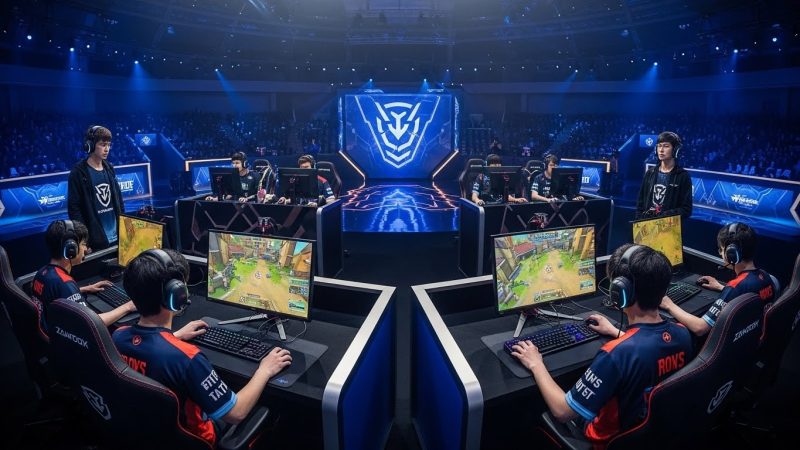
Few game genres have had as much influence on esports as MOBAs. Their emphasis on teamwork, strategy, and mechanical skill made them ideal for professional competition, leading to the creation of some of the world’s largest esports leagues and tournaments.
Today, League of Legends and Dota 2 remain among the most-watched esports titles globally. The League of Legends World Championship regularly attracts peak viewership of more than 6 million concurrent viewers (excluding Chinese platforms), while The International has become one of the most prestigious tournaments in esports history thanks to its massive prize pools and elite level of competition.
The genre has also fueled the growth of professional organizations, streaming platforms, and content creators. Millions of fans watch live broadcasts on platforms such as Twitch and YouTube, while teams invest heavily in coaching staff, analysts, sports psychologists, and performance specialists to gain a competitive edge.
Although the esports landscape has become more diverse in recent years, MOBA games continue to play a central role in the industry, generating millions of viewers, significant sponsorship revenue, and vibrant global communities.
Challenges Facing the Genre
Despite its long-term success, the MOBA genre faces several challenges in today’s gaming landscape. One of the biggest obstacles is its steep learning curve. New players must understand dozens–or even hundreds–of heroes, items, abilities, and strategies, making it difficult to compete with experienced players.
Another challenge is increasing competition from other multiplayer genres. Battle royale games, tactical shooters, and extraction shooters have attracted large audiences by offering faster gameplay and a lower barrier to entry. As a result, MOBA developers must continually introduce new content and gameplay improvements to retain existing players and attract newcomers.
Player behavior also remains a significant issue. Toxicity, verbal abuse, and intentional griefing have long affected the multiplayer experience. To address these problems, developers have invested in AI-powered moderation systems, improved reporting tools, stricter penalties, and better matchmaking.
Finally, maintaining competitive balance is an ongoing task. With frequent hero releases, gameplay updates, and changing metas, developers must carefully balance the game to keep both casual and professional play fair and engaging.
The Future of MOBA Games
The MOBA genre continues to evolve as developers adapt to changing player expectations and new technologies. While the core formula of team-based strategy and hero-focused gameplay remains unchanged, future innovations are likely to reshape how these games are played and experienced.
Artificial intelligence is expected to play a larger role in matchmaking, player coaching, and moderation. AI-powered systems can create fairer matches, provide personalized gameplay tips, and detect toxic behavior more effectively, improving the overall player experience.
Cross-platform support is another important trend. As mobile gaming continues to grow, developers are exploring ways to connect players across PC, consoles, and smartphones, expanding the audience for MOBA games and making them more accessible.
Live-service content will also remain a major focus. Regular hero releases, seasonal events, battle passes, and gameplay updates help keep communities engaged while extending the lifespan of popular titles.
Although the genre faces strong competition from newer multiplayer games, MOBAs continue to maintain loyal player bases and thriving esports ecosystems. Their unique combination of strategy, teamwork, and mechanical skill suggests they will remain an important part of the gaming industry for years to come.