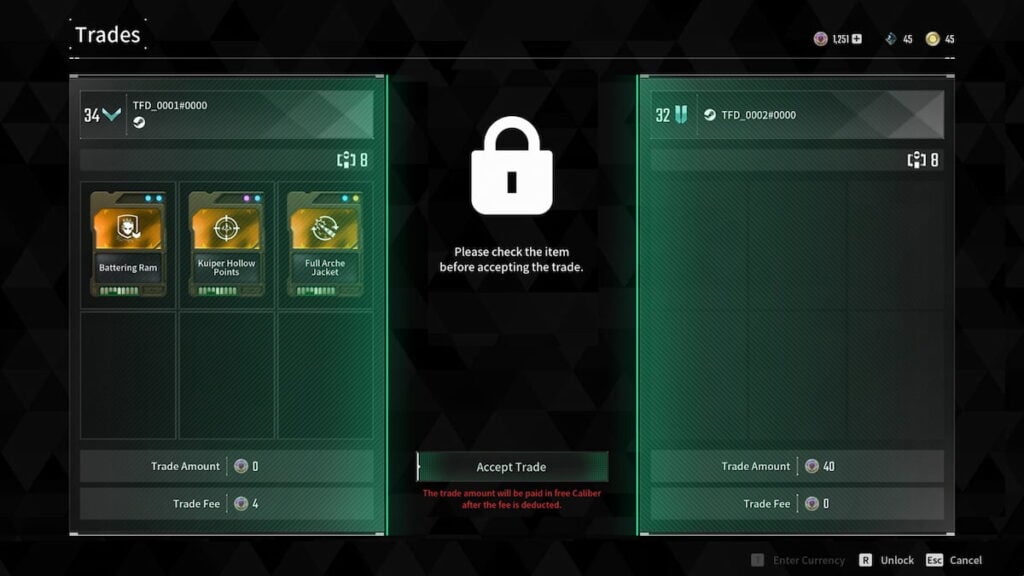
The upcoming changes in The First Descendant with the launch of Season 3, Episode 2 include the introduction of a new trading system. This feature enables players to exchange Modules for Caliber and incorporates a transaction fee, which has sparked some debate within the community.
During a developer update video on November 4, The First Descendant director Minseok Joo and community manager Jason indicated that, following player input, the fee for trades will switch from Caliber to Gold.
The developer clarified, «The intention was never to utilize trading fees as a profit source. Instead, it served as a minor precaution against possible exploitation or complications from transactions.» The change to Gold still meets the objective while alleviating fears about Nexon benefiting financially from the trading system.
Due to these last-minute modifications, the trading system’s launch has been postponed to November 20. Other content for Season 3, Episode 2 will still be available on November 6.
Trading System in The First Descendant
The trading feature in The First Descendant allows players to engage in one-on-one trades via a terminal located in Albion. Users can purchase and sell Modules using Caliber, the game’s premium currency, which also offers a means for free-to-play participants to acquire Caliber through gameplay instead of real money.
The official site will include a Web Marketplace along with a companion app that facilitates item listing and searching features.
Initially, the system imposed a 10 percent fee on the Caliber spent by the buyer. However, due to backlash from players regarding this tax on Caliber, the currency for the fee was subsequently altered to Gold.
When the trading system launches on November 20, players will be able to trade Trigger Modules, and new Ancestor Modules will become available for trading on December 4. The developers noted that while trading items for items remains a potential future feature, it presents operational challenges and will be reconsidered after the initial trading system has been in place for a period.