A pivotal moment for the gaming and esports sector in India.
The Lok Sabha, the lower chamber of India’s Parliament, passed the Promotion and Regulation of Online Gaming Bill on August 20, which seeks to impose a comprehensive ban on online betting and real-money gambling.
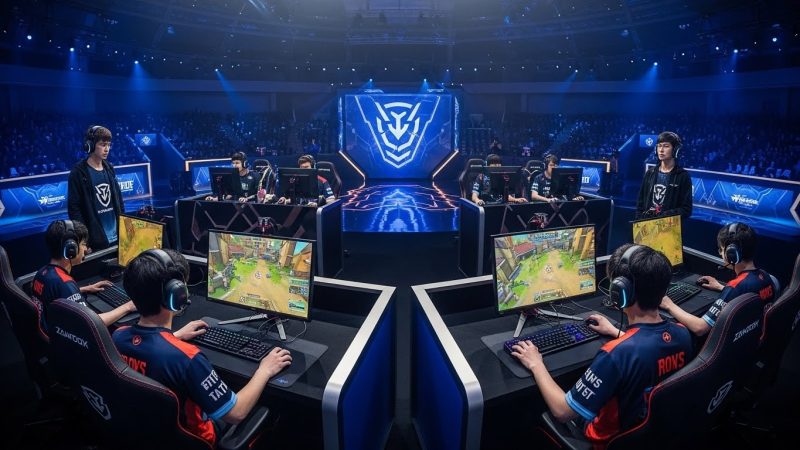
This legislation clearly aims to outlaw real-money online betting while also establishing a formal framework intended to promote and validate esports as a recognized competitive discipline.
Following years of lobbying from game developers and esports athletes for clearer regulations, the approval of this Bill marks a significant achievement. Although the industry has succeeded in achieving an official recognition for skill-based gaming and esports, this victory comes with a strict prohibition on the highly profitable real-money gaming segment, which has previously been a major revenue generator compared to casual gaming and esports.
This legislative move follows consultations by the Supreme Court, which considered a comprehensive ban on online betting platforms after discussions with key organizations like the Telecom Regulatory Authority of India (TRAI), the Reserve Bank of India, and the Enforcement Directorate.
The crux of the bill is an outright ban on what it categorizes as online money games. This prohibition applies to any game where players pay a fee or deposit with the expectation of winning money or valuable rewards. Importantly, this ban encompasses games based on skill, luck, or a combination thereof but excludes casual video games.
The legislation is extensive, making it illegal to offer, promote, or process transactions for such gaming services. Breaching these laws can result in harsh penalties, including imprisonment for up to three years and fines amounting to one crore Indian rupees for operators. Offenses of this nature are considered cognizable and non-bailable, equipping enforcement agencies with significant authority to act against violators.
The central government’s shift in policy is largely attributed to the identification of a link between the proliferation of online gambling services and «unlawful activities, including financial fraud, money laundering, tax evasion, and in certain instances, financing terrorism,» which pose risks to national security, public safety, and the integrity of the nation.
Conversely, the bill aims to formally acknowledge and develop the esports landscape by legally defining «e-sport» as competitive gaming where the outcome is determined solely by «physical skill, mental sharpness, or strategic planning,» explicitly ruling out any form of betting or wagering.
The government has committed to actively supporting the esports domain through the creation of guidelines for competitive events, the establishment of training academies and research centers, and the introduction of incentive programs to motivate Indian gaming startups and tech platforms. This expected recognition is a transformative milestone toward legitimizing esports as a professional field and establishing the necessary infrastructure for its growth within the country.
While the Lok Sabha has passed the bill, it is yet to be approved by the upper chamber, the Rajya Sabha, and then signed by the President for it to become law, an outcome anticipated in the near future.
This legislation creates a new landscape where developers and investors must now redirect their focus toward the enhanced ecosystems of esports, casual gaming, and game development, as the government has definitively closed the path to betting and gambling.
«This bill signifies a monumental change for Indian esports. By clearly differentiating between skill-based competitive gaming and gambling, it preserves the integrity of our ecosystem while paving the way for organized growth,» stated Animesh «Thug» Agarwal, co-founder and CEO of S8UL. «Now, the emphasis should be on developing infrastructure such as arenas, bootcamps, educational programs, and scholarships to cultivate the next generation of talent,» he added.
S8UL was the sole Indian esports organization to represent the country at the Esports World Cup 2025.