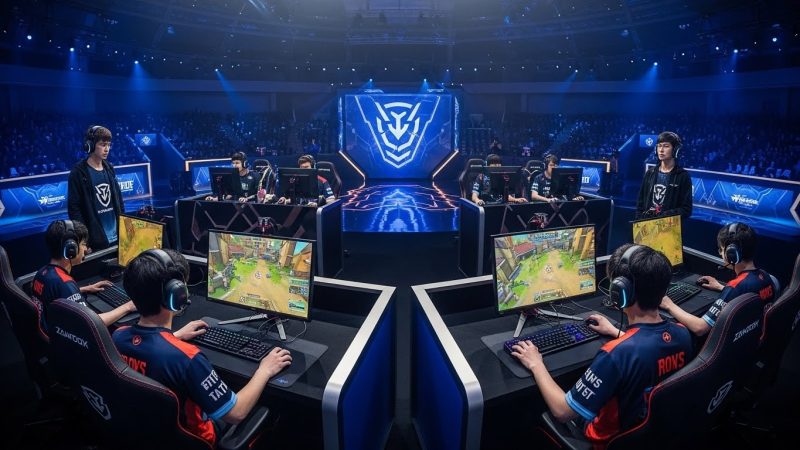
Riot Games has made a significant policy change by permitting League of Legends and VALORANT teams in the Americas and EMEA Tier 1 regions to enter into sponsorship arrangements with sports betting firms. This strategic shift is aimed at enhancing revenue opportunities for esports organizations affiliated with the company.
John Needham, Riot’s president of publishing and esports, disclosed this update on June 26 via a comprehensive article that clarified the company’s intention to pursue partnerships in esports betting while ensuring measures are in place to uphold competitive integrity and enhance the fan experience.
«At Riot, we believe that a sustainable esports ecosystem is essential not only for the present but also for the future. Hence, our commitment to supporting players, teams, and fans is at the forefront of our strategy,» Needham stated.
Needham recognized that the decision to eliminate restrictions on betting sponsorships was reached after extensive analysis and continual encouragement from teams. Betting has historically been a sensitive area for Riot, but the increasing global interest and the expansive betting landscape surrounding esports compelled the company to reconsider its position.
«Teams have urged us to revisit our policy, and after considerable evaluation to ensure we approached this correctly, we concluded it was time to create more revenue streams for teams,» he remarked.
He referred to a Sportradar report highlighting that global betting revenue linked to League and VALORANT was projected to hit $10.7 billion in 2024, with 70% of this activity occurring in unregulated markets–a situation Riot aims to directly influence.
«We believe that allowing betting sponsorships–thoughtfully and carefully–alongside the appropriate safeguards is preferable to remaining passive while fan risks and integrity issues remain unaddressed,» Needham added.
Riot’s Oversight Framework and Integrity Safeguards
In order to preserve the integrity of its esports environment, Riot is implementing a structured program featuring multiple layers of oversight:
- All betting partners must be screened and approved by Riot.
- Only operators utilizing official data from GRID, Riot’s esports data collaborator, will be authorized.
- Teams are required to establish an «Internal Integrity Program» involving policy development, monitoring, and educational resources focused on responsible betting.
- Broadcasts will remain free from betting content. Betting sponsors will not appear on Riot-owned channels, promotional segments, or merchandise.
«Maintaining integrity is not solely Riot’s responsibility; it must be a collaborative effort across the entire ecosystem,» Needham emphasized. «Teams engaging in betting partnerships must have a robust integrity framework in place and evaluate if such alignments are suitable for their brand and audience.»
Riot stressed that a portion of the revenue generated from this initiative will be reinvested into its Tier 2 ecosystem, supporting the development of emerging teams and talent through enhanced prize pools, new tournaments, and further cultivation of integrity systems and educational opportunities for up-and-coming players and organizers.
Despite this policy shift, Riot has made it clear that betting-related content will not be included in official broadcasts or social media platforms. «It is our priority to keep LoL Esports and VCT broadcasts free from excessive sports betting advertisements. Therefore, we will not allow betting ads, sponsored segments, or betting partner logos on team apparel in Riot-owned broadcasts and channels,» Needham confirmed.
He added that each team will decide how and where to showcase their betting partners, adhering to Riot’s sponsorship guidelines, platform standards, and regional laws.
Community and Individual Responses to Riot’s Initiative
Riot’s decision to permit betting sponsorships marks a significant shift in its business strategy within esports, occurring during a period when the industry is in search of sustainable revenue avenues amid ongoing financial strains.
«We believe that responsibly engaging in this domain is more advantageous than allowing others to shape it. We have previously stated our long-term commitment to esports, which entails navigating arenas like sports betting to guide and protect our brands from negative influences while creating financial benefits for teams,» Needham commented.
«Every new venture will have its hurdles, and we are prepared to make changes if necessary. Our overarching goal remains to prioritize the well-being of our players, teams, and fans, alongside the world-class esports experience we aim to foster for many years,» he reiterated.
The announcement has elicited varied reactions within the community, especially considering the contentious nature of gambling in both traditional sports and esports.
In a response to Riot’s announcement, one fan noted the irony regarding the timing, referencing a recent match-fixing scandal in the VCT Challengers North America, a Tier 2 VALORANT league. «It’s strange that we’re discussing gambling in Tier 1 LOL and VAL when we just faced a significant incident of match-fixing related to gambling in the Tier 2 scene. What makes this different besides increased profits?» they questioned.
Others expressed concerns about exposing a young audience to a sponsor category often linked with addiction and financial peril. «This is not being done responsibly. You are endorsing a dangerous habit to a younger demographic. There is no way to advocate for gambling responsibly,» one user remarked. Another added, «This is a huge mistake; gambling has already been a growing concern with your gacha systems. Why further tempt young people into something that could devastate their finances?»
Conversely, some fans welcomed the initiative, appreciating Riot finally aligning with other major esports in embracing betting partnerships. «Hot take: If you enjoy LoL esports, you should be pleased with this. Every other esports has incorporated betting, except LoL, and guess what–they’re facing financial difficulties faster than anyone. This could prolong the scene,» one supporter stated.
Others echoed similar sentiments. «It’s exciting to see Riot exploring this route, and while challenges lie ahead, I trust Riot can handle it responsibly,» another fan commented. «How naive can LoL enthusiasts be to believe that competitiveness is profitable for organizations? They are not investing money without expecting returns. If Riot introduces a paywall for esports, none of these so-called ‘fans’ would pay to watch. This is finally a positive development,» remarked a different fan.
Personally, while gambling does not interest me, I recognize the logic in Riot’s careful and controlled strategy. The fact is, only a few esports organizations are currently financially viable. The majority are struggling to survive with rising operational expenses and declining viewership following the post-pandemic lull.
Given the recent closures and layoffs in the esports sector, it’s apparent that organizations require new, stable sources of revenue. If entering into betting sponsorships is part of that plan, then Riot’s framework, with its robust safeguards and integrity measures, appears to be a sound approach. Other developers in the esports industry should take note of this strategy.